
Visit our main NCASC 2024 page for all updates and further information on digital innovation and advice.
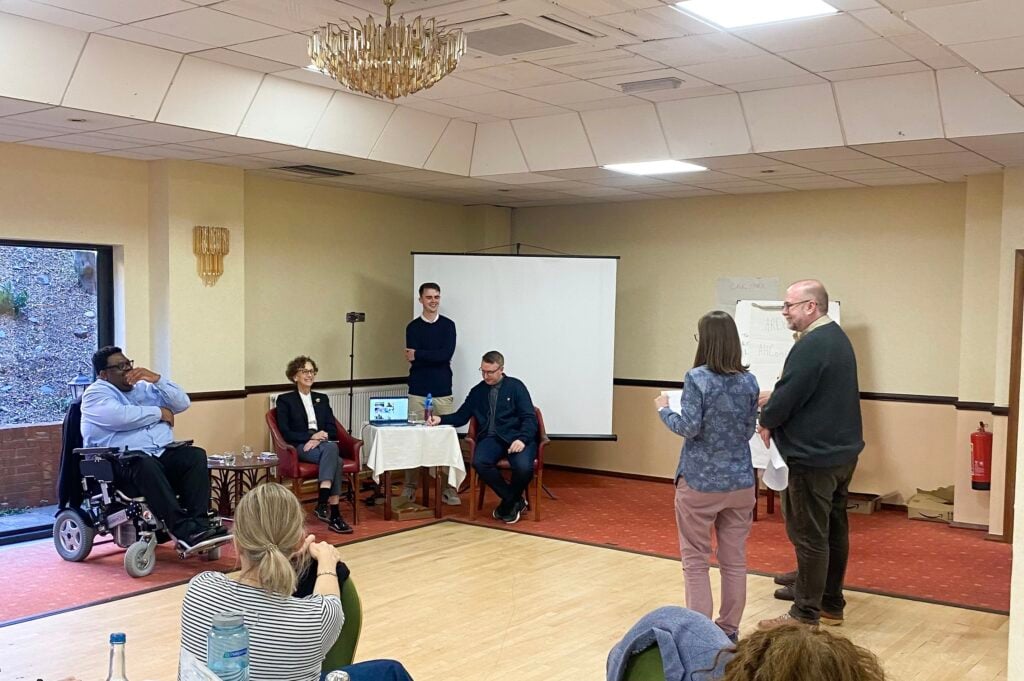
NCASC hubI was at the National Children and Adult Services Conference (NCASC) 2024 in Liverpool last week, and was struck by how much change is happening across areas and regions, even though the vehicle for social care policy reform is not yet clear. Minister of State for Care Stephen Kinnock’s speech announced welcome new monies to support local authority social care budgets, but the key topic that was missing was what’s going to happen with the National Care Service, and where will the money come from to support ambitions around a better remunerated and supported workforce? Notwithstanding the challenge of working in an evolving policy context, it was encouraging to note how strongly delegates were engaging with the topic of digital innovation and transformation, as a trend that couldn’t be ignored any longer. SCIE and Agilisys co-hosted an event on the potential around Generative Artificial Intelligence (GenAI): ‘The productivity potential of AI and digital tools’, to launch our new strategic partnership, which will support social care organisations in adopting GenAI.

This was well-attended with some great discussion with the audience about how to balance trying out new approaches with ensuring full engagement with your staff and the community so that the tech effectively meets the needs of those that draw on care and support.
The session also covered the benefits of harnessing AI to free staff from mundane tasks, allowing them to spend more time on what they chose a social care career for in the first place, supporting people. One of the panel speakers, Georgia Chimbani, Corporate Director of Health and Adult Social Care at Tower Hamlets Council and a SCIE Trustee, put it well when she said that we accept AI in our private lives but feel reticent and risk averse in a work context. If we want to improve services and benefit from the positive change that AI can bring, we need to be brave and try it out with our colleagues and people with lived experience, accepting that we may get things wrong but understanding that if we all work together we can learn, adapt, and benefit, from its strengths.
This theme of bravery also came out in the NCASC workshop SCIE ran on ‘how to enable innovation in social care’ drawing on learning from the DHSC’s Accelerating Reform Fund (ARF) for which SCIE is providing hands-on support, and a five-year research study ‘Supporting Adult Social Care Innovation (SASCI)’ led by London School of Economics (LSE) on how to scale innovation in adult social care. Dr. Juliette Malley (LSE) referenced Van de Ven’s comparison of innovation in social care to navigating a river – “no-one controls the river”. If you want to go on your innovation journey, you have to take the first plunge into the river, rather than just let it drag you along unwillingly. And you won’t know what’s coming up, but the longer you do it, the better you get at managing the rocks and turns and headwinds coming at you.
This is familiar to anyone who’s struggled to push through change in an organisation: sometimes you have to keep trying and it’s not on the first attempt that success is achieved. With innovation we need to be brave and build resilience through drawing on learning and support from others. Duc Tran, the Transformation Programme Manager leading the North West London Integrated Care System ARF projects, emphasised the critical role of robust governance and collaborative efforts among the five London Boroughs in driving project progress. He highlighted that collaboration fosters a unified agenda and aligns everyone toward a shared vision, reducing the perceived risks of change and making it feel like the natural and logical path forward.
Kevin Minier, ARF co-production delivery team member and workshop panellist, commented on the impressive positive attitude and alignment of the workshop audience in their aspirations for integration and co-production, stating that “implementing ‘new’ ideas takes courage and we need to support those who are willing to do so”.
It will be interesting to see if this desire across councils to make the best of what we currently have, trying out new technologies and transforming culture and service in the best interests of communities, will be reflected in the national policies that we will start to see emerge from the Government over the coming months. It feels like we are ready for change, and if we can collaborate and be brave together then surely we can harness the digital revolution for positive difference in a society which enables people who draw on social care to live fulfilling lives.
As part of our consultancy offer, we want to help all those delivering care to adopt digital best practice confidently. If you’re wondering how to engage with digital innovation, and would like advice, guidance or simply an exploratory chat on digital innovation or other challenges you face, and how we can support you, please visit our consultancy page.
The National Children and Adult Services Conference (NCASC) brings together leaders, practitioners, and innovators in health and social care every year. The Social Care Institute for Excellence (SCIE) is contributing to this year’s conference by exploring the potential of innovation, especially digital innovation and GenAI, to transform care services and experiences. The public needs confidence in the quality of social care services, and the sector needs a stronger, safer, and more innovative social care system. The starting point for any innovation should be the people who draw on care and support. As SCIE’s literature review on scaling innovation (2020) showed, co-production must play an essential role in the design of innovative care solutions, whether new models of care or digital technology. By taking an end-to-end digital transformation focus, local areas drive what is required rather than shoehorning in technological solutions to fit. As social care leaders continue to face significant cost pressures, GenAI digital innovation offers huge potential for reducing duplication and time spent on administrative tasks, releasing more time for care. With this area of AI rapidly developing, we do need however to increase understanding of the distinct ethical risks and implications of this type of provision in social care – and again, co-production lies at the heart of ensuring the ethical use of AI.

GenAI also supports improved integration of information between health and care systems. Health and social care are interdependent, and without a coordinated approach, people will continue to face under-met and unmet care needs, and family carers will remain overstretched.
GenAI digital tools and methods also have the potential to increase choice, promote independence, support healthier lifestyles, and deliver better outcomes and service user experiences; while building workforce skills, promoting professionalism, and enhancing efficiencies in care work.
SCIE Agilisys partnership
That is why I’m excited that SCIE and Agilisys launched a strategic partnership at NCASC, to support social care organisations to adopt GenAI, working collaboratively to share knowledge, skills and capabilities. Combining the strengths of leading provider of public sector technology solutions Agilisys with not-for-profit SCIE’s strategic expertise and wealth of understanding of the business, ensures the quality and safety of practice, allowing us to tailor solutions that bring the greatest impact for local areas.
Together, we feel passionately about the importance of improving social care choices through digital technology so that those delivering care can adopt digital best practice confidently, supporting adults and children to lead the life they choose, as independently as possible.
As GenAI tools proliferate, the partnership between SCIE and Agilisys will support the ethical application of AI products within social care.
Our workshops
This year at NCASC, we hosted two workshops picking up on the themes above and designed to empower partners in local and central government, voluntary organisations, and the private sector with practical tools, information, and strategies.
Thursday 28 November, 14:20 – Strategic change and strengths-based approaches: Co-production every step of the way.
This session explored how co-production can underpin reform more broadly, through sustainable, strengths-based approaches in social care. By involving people with lived experience, their carers, and their families at every stage—from design to delivery—services can become more responsive and effective.
Friday 29 November, 10:45 – Accelerating Reform Fund: How to enable innovation in social care.
Innovation is key to addressing systemic challenges in social care. This session delved into strategies for fostering innovation and explores practical examples of success, giving an overview of a range of digital and wider innovations taking place in the projects funded by the Department of Health and Social Care’s ARF across the country.
The Fund is the first such to specifically focus on innovation in social care, and unpaid carers, and I’m keen to stress the importance of this being set up as a learning programme. It is through SCIE, and national evaluation partner Ipsos, capturing the learnings of both success and failure, what the barriers are in practice and how to overcome them, that we can truly ensure stronger, better future social care innovation. Naturally our role in galvanising co-production and ensuring projects are supported to do this well, is key to ensuring that people who need care, and unpaid carers, are at the heart of the programme. We’re also focusing on convening local authorities into communities of practice, so that they can benefit from valuable shared learnings, peer support and expert insights across the country.
Other new partnerships
This July, we launched a new partnership with Partners in Care and Health, the Local Government Association (LGA), and the Association of Directors of Adult Social Services (ADASS), delivering a new programme of sector-led improvement support for adult social care and public health services in councils.
Visit our main NCASC 2024 page for all updates and further information on digital innovation and advice.
NCASC hubThe Social Care Institute for Excellence (SCIE)’s safeguarding team collectively has about 170 years’ experience of managing safeguarding concerns relating to adults, children and families within social care, policing, education and the charity sector. As the theme for this year’s safeguarding adults week is ‘working in partnership’, we would like to share what we have learned from seeing some brilliant examples of practitioners and organisations working together with individuals, their families and other professionals over the years, as well as in some cases, poor practice in relation to multi-agency working. Drawing on our experiences alongside learning from the national analysis of safeguarding adults reviews (SARs) and the work of the Child Safeguarding Practice Review Panel, we have set out some tips for organisations and practitioners below. These are not new and neither are they exceptional, but they form the foundations of what enables everyone to work together in preventing and reducing harm and abuse.

Relationships are everything
We hear frequently in the training we deliver to colleagues working across different sectors, that at times they feel frustrated with external partners because they feel that they are not listening, they are not understanding, or that they are coming over as patronising when information is shared or concerns are raised with them.
A webinar that we ran in March 2024 on supporting third sector safeguarding referrals addressed some of these frustrations. While we recommend that you access the full webinar, the key point to take away is that if you are a Designated Safeguarding Lead within your organisation we recommend investing some time in getting to know your local safeguarding partners and building positive working relationships with them. This will help you to develop a good level of understanding of your local systems, and it will support your partners to increase their understanding of your organisation and the limits of your role and responsibilities.
Meaningful working relationships take time to develop, however they aid joint problem solving and multi-agency risk management. We all have the same goal in safeguarding, however because our roles differ from our partners’ roles, we must work towards those goals collectively and utilise each other’s expertise.
A good starting point would be to consider your key safeguarding contacts within your local authority. If you are not sure of what the local authority’s roles and responsibilities are in safeguarding adults and children, documents such as the ‘Care and support statutory guidance’ and ‘Working together to safeguard children 2023’ can provide helpful summaries.
Get to know your local Safeguarding Adults Board (SAB) and your Local Safeguarding Children Partnership (LSCP)
We recommend visiting your local SAB and LSCP websites which publish several useful resources such as local case reviews, annual reports and local multi-agency, escalation and professional dispute procedures. Many also offer free or affordable learning events which are likely to provide fantastic opportunities to develop relationships with partners and find out about meaningful work they do in your local area.
Remember that not all learning opportunities come from formal training. Reading local Safeguarding Adults Reviews (SAR) and Safeguarding Children Practice Reviews (SCPR) can help you to understand how your local partners work, where local collaborative practice can be improved, and where best practice can be identified.
Know your local policies
Once you have familiarised yourself with the contents of your local SAB or LSCP websites check how your organisational policies and procedures align with those of your partners. The national SAR analysis noted that in many cases reviewed, there were failings arising from practitioners either not being familiar with, or incorrectly applying policy and procedures.
Information sharing
Many professionals express fear of sharing safeguarding-related information with external partners, particularly without consent, believing that this will cause a breach of law (UK GDPR and the Data Protection Act 2018). We would like to remind you that legislation should never be a barrier to justified information sharing. You may find this SCIE guidance useful to learn more about circumstances when information should be shared, even without consent.
Partnership working means working together, not handing things over
Members of our team have worked closely with a variety of organisations and professionals over the years and we have often heard colleagues expressing worry about safeguarding, particularly if this was an area of practice they did not feel confident in managing as a single agency.
It may be tempting to try and hand a concern over to another organisation as soon as it has been identified in fear of getting something wrong, however working in partnership is wider than just information sharing, it means working together continuously.
What helps make safeguarding effective is trying to identify how your organisation may support the child, adult or family who may be subject to a concern going forward. Allied to that is considering how to make communication with other organisations involved in a timely and effective manner, to ensure successful coordination of tasks. For example, there may be benefits in providing support jointly where needed, this could include between health and social care organisations in Integrated Care Systems (ICS).
The strength in partnerships is our differences
When safeguarding works well, it’s because of the knowledge, skills and opportunities that each practitioner and organisation brings to the multi-agency ‘table’. It’s the different perspectives and professional judgement that enable us to see the adult, child or family holistically and in a wider context of environment, community and culture. Good partnership working means we create an environment where everyone is listened to, everyone has a voice, and positive challenge is valued. As professionals we cannot expect ourselves to possess every piece of knowledge or be an expert in every subject in existence. It’s of critical importance for us to recognise the value of our partners and rely on their expertise to support those who come into contact with our services to the best of our ability. At times this support requires a referral or signposting to another local or national agency which can advise regarding specific subjects.
Trying to make every effort to attend, or have your information represented at multi-agency meetings
This piece of advice may sound very obvious, however we have consistently observed the value and importance of being involved in multi-agency meetings (e.g. MARAC or MARM). Remember that your organisation’s involvement may be crucial to a robust risk-management plan or a support plan being put in place for an individual, or a family, meaning that they receive appropriate and timely support. Every organisation holds different information about people who come into contact with it. Providing updates to partners ensures that those involved in supporting someone understand the full context of their circumstances and can make collective decisions about how to reduce risk or promote safety together.
Valuing the differences we bring in knowledge and skills, recognising the different supports we offer, can ultimately lead to good prevention or good interventions which are in line with the person’s wishes and needs. To do that we need to value and make the most of each other.
If you would like more information about our safeguarding offer, or to discuss how we can help you please contact our safeguarding team. As we are not-for-profit, our consultancy and training services offer exceptional value for money, and our income goes towards improving social care.
Last week the Association of Directors of Adult Social Services (ADASS) released their 2024 Autumn Survey which demonstrates the “ongoing and intensifying pressures” on the adult social care sector. Councils have been asked to make almost £1bn in savings for 2024/2025 while adult social care costs continue to increase. At the same time, “81% of councils are on course to overspend their adult social care budget” this fiscal year which is up 8% from the previous year. These figures are especially concerning due to the recent Autumn Budget announcement with only £600mn of the budget being allocated to social care. While we welcome the new funding and the increase in the Carer’s Allowance, councils will need further support in order to support those drawing on care and support.

Councils want to help support their constituencies through innovation and adhere to this Government’s priority of prevention. When asked “What would be most helpful to improve your information and advice offer?” the top response by councils, at 81.6%, was for “ring-fenced government funding for an enhanced digital offer, including Artificial Intelligence (AI)”. Similarly, 75% of Directors had evidence that Assistive Technology and AI, including telecare and digital communications, prevented, reduced or delayed needs. This is consistent with the 2024 ADASS Spring Survey. Innovation and digital technology can make a real impact in the social care sector but only if there is adequate investment in its implementation.
This aligns with what the Social Care Institute for Excellence (SCIE) has heard from representatives ranging from local councillors to parliamentarians to sector leaders across political parties. At last year’s political party conferences, we hosted roundtable discussions on upstream prevention and digital technology. From those meetings we found similar themes around the importance of innovation and technology in the social care sector resulting in our creation of the Caretech Charter, which we launched during this year’s party conference season in partnership with Policy Connect. It is clear that Directors are in alignment on the importance of technology and innovation in supporting their services and their constituencies.
Councils are already stretching their budgets to the breaking point to meet their legal obligations forcing them to support only those in the most dire situations. Directors reported an estimated £564mn overspend on 2024/2025 adult social care budgets by councils. Simultaneously, councils are also being asked to find significant savings in their budget resulting in £903mn in savings. There is appetite to improve the sector with proof that investment today will lead to prevention and savings tomorrow. However, if we want to see lasting change in the social care sector, with long-term savings, we need immediate support in funding. The ADASS 2024 Autumn Survey showed us that Directors of Adult Social Services are in favour of refocusing the system from sickness to prevention and moving from hospital to community. They simply need the support to see it through both in terms of funding and innovative social care delivery methods.
As experts in this field with deep experience of bringing partners together throughout social care to innovate and improve lives, we are ready and eager to work with all levels of government from local to national to deliver a vision which creates a better social care future.
At SCIE’s recent all-staff away day, we took a creative approach to inspire fresh ideas. Drawing from the popular “Dragons’ Den” TV show, we held a session where teams from across the organisation pitched solutions to social care challenges. But this session wasn’t just about pitching. What made it stand out was the involvement of people with lived experience. They shared their personal stories with SCIE staff, and these stories became the spark for innovation. People’s real-life experiences of care formed the foundation of the staff design activities. Staff groups began by listening to people’s first-hand accounts of their daily challenges. This helped the groups move beyond theory to connect on a human level with the problems to be solved, spurring creative thinking in the process. The feedback from participants was overwhelmingly positive. One person shared, “I really felt listened to. I could tell the staff were really engaged with my story and wanted to find a solution that could work”. Another said, “Staff were very respectful of me, I’ve never been part of something like this before, it was very fun”.

For staff, the session was just as valuable. Interacting directly with people who have lived through these challenges made the innovation process more grounded and relevant. Instead of working with assumptions or distant data, teams gained a deep understanding of the real issues at hand.
By the end of the day, we walked away with a range of innovative ideas, all rooted in real needs and real stories. The session proved that when people with lived experience are at the heart of problem-solving, the solutions are more meaningful, practical, and effective.
This was not just an exercise in creativity, but a powerful reminder that innovation must begin by truly listening to the people we are trying to help.
We would like to thank everyone with lived experience who took part and made the session a success. If your organisation is interested in holding similar activities, you can find more information on our co-production pages.
Yesterday marked the launch of the public consultation for the NHS 10-Year Plan. The opportunity to design a future health service made me think about critical learning from my recent design degree. The “extreme” or “super” user is a key concept in the practice of human-centred design. The objective is to understand the experiences of outliers – the people in the tail of a bell curve – and to design solutions that work for them, but also for all. People who draw on social care and support could be considered super users. These may be people of working age with life-long conditions and disabilities, or they may be older people with complex conditions requiring a mix of health and care interventions. A deep understanding of their experiences and expectations ought to be at the heart of the government’s consultation for the NHS 10-Year Plan. Designing to address how they describe the system’s shortcomings will generate fresh insights and ideas for making improvements for all.

The consultation has three focus areas: community services, digital-first services and prevention. Within the consultation is a clear proposal for neighbourhood health centres, and care workers are expected to play a role in this expansion of primary care. Digital-first proposals include expanding shared care records and building on the existing NHS mobile app for what the Secretary of State is calling the new “patient passport”. In terms of prevention, the consultation mentions scaling digital innovation that supports people to manage their own conditions at home.
This all sounds very whizzy and exciting, but the headlines still concentrate on hospitals, GPs and patients. Thinking about our super users in social care, the solutions are less straightforward than the proposed plan of action.
For example, will the move towards neighbourhood health centres lead to culture change in primary care – i.e. from a transactional service-led model of care, to an enabling relationship that supports personalisation and continuity of care?
Will the expanded NHS app and shared care records offer people who draw on care the opportunity for two-way communication? Will care records represent the full picture of a person’s needs by including information from social care providers, the majority of whom are not part of the public sector?
And will digital innovations work for people who often face exclusion from the digital world because of age, disability or health condition, such as learning disabilities or dementia? Are we blinded by the excitement of technology and forgetting that the essence of care is relational? And how can we be confident that data about people’s personal lives is secure and not used to limit access to care?
At SCIE, we will be submitting a formal response to the government’s consultation. Our starting point will build a case for change through the experiences of super users in social care. As we noted recently, the Darzi Review lays bare the critical and long-standing issues facing both the NHS and the social care system, from service fragmentation and underfunding to inefficiencies and an ageing population.
Most importantly, the government’s NHS consultation continues to strengthen the case for acting on social care reform sooner rather than later.
In today’s society, more of us are living into our 70s, 80s and even 90s. Latest estimates suggest that there are more than 9.3 million people aged 70 and older in the UK, an increase of 24% since 2012. Meanwhile, the Centre for Ageing Better expects the number of those aged 80 and older to more than double in the next four decades. Ageing is a natural part of life and for many people, maintaining independence is hugely important. Indeed, many people, as they get older, live active lifestyles, keep up with hobbies, volunteer in their communities and spend time with friends and family. The ability to continue living at home and doing the things we love is a vital part of preserving our sense of self, but things like a hospital admission or a gradual loss of physical capabilities and confidence can threaten this. Reablement services are designed to help people regain their independence. It is entirely different from long-term care, which can increase dependency. However, not everyone benefits from reablement as much as they could. This is often because they do not engage with the service. There are lots of different reasons why someone may not ‘buy into’ and actively work at being reabled, preventing them from benefitting fully.
What is reablement?
Reablement is an intensive social care intervention that helps people regain or maintain their independence by helping them find new ways to manage their daily lives. It is a time-limited set of services delivered to people in their own homes.
Older people recently discharged from hospital are among those who are referred to reablement services and can benefit from this intervention. Research shows that the people who achieve the best outcomes from reablement are those who participate fully with the intervention and engage well with practitioners. They often avoid the need for any form of ongoing care and their risk of hospital re-admission is decreased.
Although reablement has been a core pillar of social care for about 20 years, there remains key challenges that interfere with people fully embracing its potential.
The EAGER research project, funded by the National Institute for Health and Care Research’s School for Social Care Research (SSCR) and led by Professor Bryony Beresford from the University of York, identified several factors that affect engagement, including:
- a poor understanding of reablement among referring agencies, older people and their families
- misconceptions that reablement is the same as ‘traditional’, long-term home care
- inconsistent language when talking about reablement, which can lead to confusion
- a lack of support from family members
- service delivery pressures, such as lack of time
- gaps in staff training (e.g. conflict resolution skills).
To help the sector overcome these barriers and promote better outcomes for those being reabled, the SSCR funded Professor Beresford and her team to work with reablement staff, older people, and their families to develop a series of evidence-based, practical recommendations on supporting older people’s and family members’ engagement with reablement. SCIE has now published these recommendations as an online practical resource.
Supporting client and family engagement with reablement
This new resource, supporting client and family engagement with reablement, is aimed at those who manage and deliver reablement services, and those who commission these services. It includes evidence-based best practice guidance and information to tackle those key barriers preventing users from benefitting fully from the intervention.
Maximising the potential of reablement makes sense to local public services as well as older people. Effective reablement helps people to avoid the need for ongoing care, easing pressures on families, the NHS and the wider social care system.
The resource aims to address key issues, such as:
- information provision to older people and their families
- ensuring consistent messaging about reablement by referring agencies
- ways of working which support engagement and overcome resistance
- ensuring timely access to equipment and other aids
- staff training and maximising peer learning and supervision opportunities within the team.
In addition to recommendations for reablement services, the resource also calls for greater investment at a national level to raise public awareness of reablement and social care. Equally, more funding locally is needed to ensure reablement staff have the time they need enough time to work with clients and their families.
As our society continues to age, reablement services will only become more important in helping people to regain their independence, live well and enjoy a good quality of life. It is therefore crucial that we always strive to improve practice and boost outcomes wherever possible.
Supporting engagement with reablement: a practice guidance resource for reablement services
Starts at Home Day is a vital opportunity to highlight the profound impact that supported housing has on communities across the country. This annual event celebrates the essential role that supported housing plays within the housing, health, social care, and criminal justice systems. At the Social Care Institute for Excellence (SCIE), we stand firmly behind this campaign, advocating for the recognition and long-term planning needed to sustain and enhance supported housing services. Without a robust, long-term strategy, thousands could face a lack of essential support, leading to increased public costs and a greater risk of homelessness or prolonged institutional care. This year, Starts at Home Day provides a crucial platform to urge the new government to prioritise and deliver for supported housing and the individuals it supports. We believe that the Social Care Future vision should serve as our guiding ‘north star’ as we navigate the future of supported housing: “We all want to live in a place we call home with the people and things we love, in communities where we look out for one another, doing the things that matter most.”

Embracing this vision means committing to a future where supported housing options play a key role in fostering vibrant, supportive communities that enable individuals to thrive. By aligning our efforts with this vision, we can ensure that housing, health, social care and communities work together to ensure housing and support options that fully support wellbeing.
This was instrumental in guiding the SCIE-led commission, The Role of Housing in the Future of Care and Support. Funded by the Dunhill Medical Trust, the commission set out a vision and a roadmap to enhance the availability and quality of housing with care and support options for older people.
In line with the commission recommendations, SCIE is calling for two key actions:
- The establishment of a long-term plan for housing that ensures everyone can live as independently as possible, for as long as possible, in homes that meet their needs. This plan should also provide appropriate, affordable options for individuals moving on from supported housing.
- Local authorities and integrated care boards need support in planning, funding, and commissioning supported housing, ensuring it is part of a strategic plan to address housing needs. This includes comprehensive data collection and a recommitment to the £300m Housing Transformation Fund. Every decision about care should incorporate housing considerations.
We recognise that understanding local population needs now and in the future and creating a comprehensive, co-produced plan for housing options is not simple and requires joint working across departments and sectors. We also know there are some great examples where this has been achieved and where more housing options are being developed.
We recently published a toolkit to support local areas in creating effective place-based plans that include a full range of housing options for older adults. As we pilot this toolkit and engage with various local authorities, it is clear that collaboration across health, housing, social care, and community sectors is essential for planning and delivering a diverse array of housing solutions – but it will not be achieved across the country without Government action and support.
To find out how you can get involved in Starts at Home Day visit the website.
The 2024 Association of Directors of Adult Social Services (ADASS) Spring Survey released last week confirmed what we in the sector have long known to be true: the social care system is at a breaking point. Local councils and their limited budgets are unable to meet the increasing demand for social care, especially requests from individuals with complex care needs, and the expectations laid out in the Care Act. This has resulted in longer waiting times for discharge from hospital and a heightened pressure on the NHS. Now is the time for action to support the social care offer through greater investment in the social care sector.
Leah Smith is an NHS Peer Trainer and is regularly involved with co-production activities. In this blog, Leah reflects on their experience as a member of a group of people with lived experience who planned and delivered a co-produced event with the national mental health charity Mind. The co-production experience I’ve gained through the process of co-developing and co-delivering a recent Lived Experience Leadership and CEO Event with Mind has been invaluable. Working in an NHS Lived Experience role, I am familiar with co-production; it is a process used regularly within the service I work for. Mind’s approach to co-production was somewhat different to the approach I’m familiar with, and this enabled me take lots of learning from the experience that I could then share with my colleagues.

Within this co-production space, there was diversity in lived experiences and identities amongst group members, which contributed a richness to our conversations and decisions. Each of us in the group had equal power in terms of decision-making right from the beginning.
We co-produced the event from start to finish, using last year’s event as inspiration and guidance where needed. This compares dramatically to some of the co-production I’ve witnessed in various spaces over the last few years, where the more appropriate terminology would be ‘involvement’ rather than ‘co-production’.
I felt truly valued for the experiences and skills I brought to the space when planning this event; my video editing skills (while amateur) were celebrated, and I felt excited about bringing an idea to fruition in a creative and resourceful way.
Through this collaborative, inclusive, and accessible co-production space, I got to practice and build on a range of different skills such as time management, organisation, communication, and assertiveness.
Additionally, it was wonderful to have the opportunity to speak to the CEO of Mind and ask her questions directly. It challenged the power differences that exist within large organisations – Sarah Hughes appeared to genuinely value the questions, reflections, and thoughts of the people in attendance at the event, ultimately resulting in attendees recognising their own worth and value.
Having support from the Lived Experience Leadership team at Mind enabled this event to run as smoothly as possible. As members of the co-production group, we were supported each step of the way – there was never any pressure to take on roles or tasks that we did not feel comfortable with. We were reassured about what our roles were during the event, and what the roles of Mind staff were. This meant I felt informed, empowered, and confident in the role I occupied during the event.
Something I can sometimes find challenging when it comes to co-production is that in my experience, a group can sometimes be hesitant to make a final decision unless there is unanimous agreement. What this co-production process taught me is that it is okay if there are differing thoughts within the group – not everyone has to fully agree with a decision – and instead of this negatively impacting on the respect we had for one another, it only strengthened it.
I would like to thank everyone who enabled the event to run as successfully and smoothly as it did. The opportunity to be a lived experience leader alongside an inspiring group of people is one I will hold dear to me for a long time!
It was a fantastic experience, and I was pleased to hear that Sarah Hughes would like these events to take place on a more regular basis.
A case study highlighting the experiences of other planning group members and showcasing learning for people who are interested in promoting lived experience leadership in co-production is available in Mind’s Influence and Participation Toolkit.
Kathryn Smith and Patrick Wood: Addressing gaps in co-production.
If you would like help to address ‘what’s missing’ from your co-production approach, please contact SCIE at info@scie.org.uk to hear more about how we can support you.
Person-centred care and support can be incredibly powerful, not just for individuals who receive it but also for their loved ones and those who provide it. We know that when services are designed around people’s needs, this can lead to better outcomes, such as empowering individuals to manage their own care, strengthening relationships between people who draw on care and support and health and social care staff, and overall better health and wellbeing. Co-production plays a vital role in ensuring effective person-centred care; working in partnership with people with lived experience, carers and families to design and deliver services is the only way to ensure social care and healthcare models offer people real choice and control. At SCIE, co-production underpins and informs everything we do, which enables us to recommend best practice in social care. And, as someone who has drawn upon social care in a personal capacity for myself and other members of my family, I am passionate about making sure people are consulted, and their voices valued and respected, so that we build social care provision in a way that best meets their needs.
Co-production Week 2024
Every July, we take the time to celebrate the benefits of co-production, but it’s also important to use this opportunity to look at where we can continue to improve our approach to it.
The process of co-production isn’t always easy, but it is always hugely rewarding for everyone involved. This is why it’s so important we get it right and always explore ways to do things better.
This Co-production Week, we are throwing a spotlight on four key areas that we have previously identified as needing greater focus to make sure co-production is as inclusive and as effective as possible. These are:
- increasing equity and diversity in co-production
- demonstrating the impact and difference co-production makes and how we can make a good business case for it
- accessing better training and development, and
- the need for clearer definitions and language around co-production and social care.
Last week on LinkedIn, many of you told us that highlighting the impact co-production can make is a particular challenge. We’re pleased to be able to support you in this with our new Co-production impact resource, which will help you develop a flexible framework to demonstrate impact more easily and consistently. And of course, it has been developed with the support of people with lived experience of care, and co-production practitioners to make sure it is grounded in best practice.
You have also been telling us on X that increasing equity and diversity is a struggle. We will be discussing this, and the other key areas, in more detail throughout the week and particularly as part of a workshop at our online conference on Wednesday.
Ahead of Co-production Week, I had the pleasure of speaking to Patrick Wood, Chair of our Co-production Steering Group. We had an interesting discussion about the four ‘missing’ areas we have identified, and what needs to change and how.
As Patrick said during our conversation, by focusing on what’s missing in co-production, we hope to spark discussions and innovations to address these gaps and ultimately improve people’s experience of co-production in social care.
Kathryn Smith and Patrick Wood: Addressing gaps in co-production.
If you would like help to address ‘what’s missing’ from your co-production approach, please contact SCIE at info@scie.org.uk to hear more about how we can support you.
In social care and beyond, demonstrating the impact of projects and services is increasingly more important not only to understand the value of such initiatives but also to keep funders interested in providing much-needed support. In co-production this is no different. Despite the known importance of demonstrating impact, recent research has shown that not enough co-production initiatives have been able to systematically demonstrate impact. People who draw on care, social care workers, and leaders are consistently highlighting the positive changes that co-production makes, and this becomes even clearer when we listen to individuals about the benefits of co-production on their lives and on the services they rely on. However, the low availability of accessible frameworks can be a barrier to reporting impact in systematic ways to help inform funders’ decision-making and make co-production a priority.

Supporting impact assessment in co-production
Based on this need, SCIE has developed a resource to support groups and organisations to identify and report the impacts of co-production. The resource offers a more accessible approach based on the Theory of Change with top-level guidance and definitions of key terms accompanied by a suggested template and an easy-read summary to support the involvement of people with lived experience in the impact assessment process.
How was it developed?
The resource is currently funded by the DHSC and is organised by research analysts Daniel Jupp Kina and Tasnim Rahman who worked along with Active Prospects and SCIEFliers co-production groups to shape the resource. A steering group formed by people with lived experience was responsible for making key decisions throughout the project.
What have we learned and how has this shaped our approach?
A literature review and interviews with people with lived experience and co-production workers were undertaken to support the definition of an approach for this resource. Some of the key learning included:
- Not enough groups and organisations are reporting the impacts of co-production in their work and on people’s lives. More could be done to demonstrate the importance of prioritising and resourcing co-production.
- Impact is defined in a variety of ways, and it can be confusing to identify impact if we are not clear on what we are looking for.
- Understanding impact is complicated and often the approaches and tools available are not easy to use. Language, accessibility, and complexity are key challenges.
- There is more focus on short-term outcomes than on long-term impact.
With these (and other) messages in mind, we developed an approach that:
- Offers clear definitions and simple explanations.
- Is flexible and can be tailored to different types of projects and needs.
- Provides a breakdown of the journey towards impact.
- Signposts to useful publications and resources for further guidance.
- Provides a template and an easy-read summary.
Access the resource to see how we translated these principles into practice.
What is next?
The project is now entering a test phase and we are looking to work with local authorities and local organisations to pilot test the resource. If you are interested in taking part or would like to provide any feedback on the resource, please contact Daniel or Tasnim at info@scie.org.uk.